
Asymmetric Justice at the Landfill
In 2013, a Welsh computer engineer named James Howells accidentally threw away a hard drive containing the private keys to 8,000 Bitcoin. It ended up in the Docksway landfill in Newport, Wales - a city where nearly a quarter of neighbourhoods rank among the most deprived in the country. Today, the coins on that hard drive are worth somewhere north of £750 million.
For over a decade, Howells has begged, negotiated, proposed, and ultimately sued Newport City Council for permission to excavate the site. He assembled a team of remediation experts. He secured funding from hedge funds and private investors. He offered to cover every penny of the excavation costs himself. He offered the council and residents of Newport 30% of whatever was recovered - roughly £225 million at current prices, or about £1,500 for every man, woman, and child in the city.
The council said no. Every single time.
This story is usually told as a curiosity - the most expensive mistake in crypto history. But it’s more interesting than that. It’s a case study in four failures of institutional reasoning - failures that aren’t specific to Newport, but explain why bureaucracies everywhere are struggling to keep up, as the train leaves the station.
Expected Value
The expected value calculation is almost comically lopsided. Howells’ team claims an 80% chance of locating the hard drive. Let’s be aggressively conservative and call it 30%. If we give a 50% chance the data is recoverable if found, that’s a 15% overall probability of success. The council’s 30% share at current prices is roughly £225 million. Expected value: £34 million. Cost to the council: zero. Howells funds everything.
Any poker player, any venture capitalist, any sane person would take this bet instantly. You would be fired for turning it down.
But institutions don’t typically compute expected value. In On the Edge, Nate Silver draws a line between two types of thinker. The River - poker players, quant traders, startup founders - people who embrace risk when the odds are favourable. And the Village - government, legacy media, parts of academia - people who are process-oriented and view risk as something to be mitigated, not considered on its merits.
Newport City Council is the Village in its purest form. A Village thinker hears “Bitcoin”, “landfill” and “treasure hunt” and every institutional antibody activates at once. It sounds like a scam. The vibes are wrong, and in the Village, vibes are load-bearing. The council didn’t just say no - they refused to meet with Howells in person for over a decade.
A river thinker hears “dig up a landfill to recover a Bitcoin hard drive” and strips away the surface absurdity to compute the expected value.
Asymmetric Justice
Asymmetric justice makes it worse. Zvi Mowshowitz’s essential insight:
- If you act and it goes wrong, you’re punished.
- If you don’t act, no matter what opportunity is lost, nothing happens to you.
Under those rules, the only winning move is not to play.
Consider the councillor’s decision tree. If they approve the dig and it fails, the headline writes itself: “Council Approves Crypto Treasure Hunt Through Landfill - Finds Nothing.” Career damage. Ridicule. Opposition ammunition. If they approve and it works, who gets the credit? Howells does. The council merely allowed something to happen. But if they say no? Nothing happens. No headline. No blame.
The distortion runs all the way to the courtroom. The council’s own barristers described Howells’ offer to share proceeds with Newport’s residents as an attempted “bribe.” A quarter of a billion pounds for a deprived city, was reframed as corruption. That’s what happens when an institution needs to justify a decision it made for entirely different reasons.
Omission Bias
Omission bias makes it invisible. Newport will never be held accountable for the quarter-billion pounds it prevented from existing, because you can’t point at an absence. Nobody protests over money that was never received. No journalist writes “Council’s Decade of Inaction Costs City Quarter-Billion Pounds” because there’s no event, no moment, no photograph.
The loss is distributed across every underfunded school, every shuttered service, every deprived neighbourhood that stays deprived for another generation. For a town like Newport, £225 million isn’t a windfall - it’s a generation of investment that will never arrive. But because those losses are counterfactual, they carry zero political weight.
The Sarcophagus
Then they made it permanent. The first three failures explain why the council said no. The fourth ensures no future council can say yes.
Two months after winning in court, the council announced it was closing the landfill and capping it with a solar farm. On the surface: green energy, sustainable development, progress. Functionally: the permanent destruction of the option to ever revisit this decision. An active landfill could, in principle, be excavated by a future council with different priorities. A sealed site with infrastructure on top cannot.
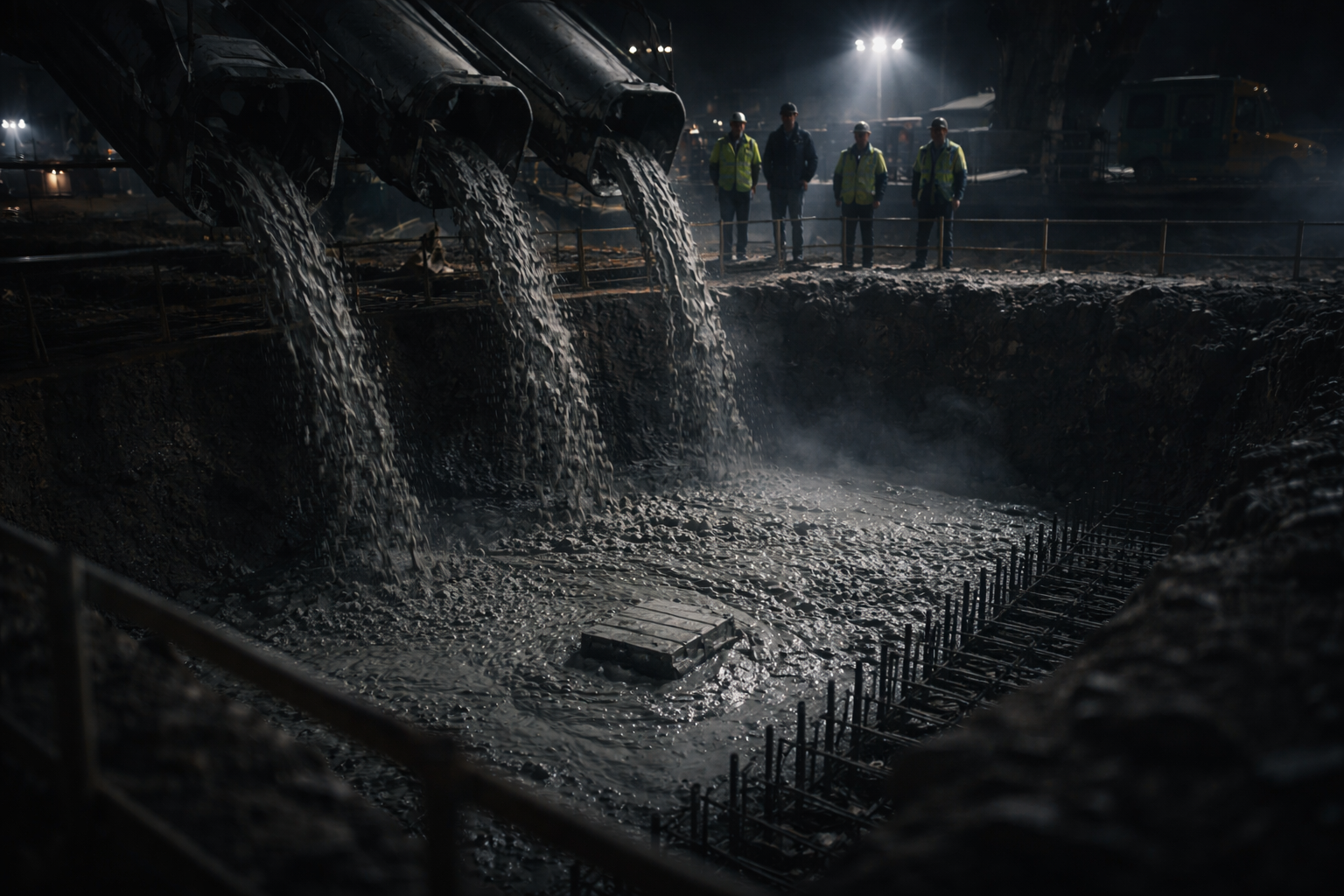
The court made the absurdity official. In January 2025, a High Court judge ruled that under the Control of Pollution Act 1974, the hard drive became council property the moment it entered the landfill. Newport City Council legally owns a device with three-quarters of a billion pounds sitting on it - but they refuse to look for it.
This is how institutions deal with problems they can’t solve: make them unsolvable. The solar farm isn’t a solution. It’s a sarcophagus. The opportunity dies, under a tomb called progress.
The hard drive sits under 25,000 cubic metres of rubbish. Soon it will sit under a solar farm as well. Four failures - of calculation, of incentive, of accountability, and finally of concrete and steel - and £750 million rots in the ground. Not because anyone decided it wasn’t worth recovering, but because no one could afford to be the person who said yes. The system worked exactly as designed.